Why your QBR is 80% rear-view mirror
The default QBR format is a status report dressed up. Slide 1: "Here's what we did last quarter." Slide 2: "Here's the metrics." Slide 3: "Here's the plan." By the time you get to the decisions you actually need from leadership, you have eight minutes left and three execs already looking at their phones.
The fix isn't a better deck. It's an inverted format: lead with the two or three decisions you need from this room, then justify them with the data, then the forward-look. The history goes in an appendix nobody reads — which is fine, because nobody was going to read it anyway.
"A QBR is a steering opportunity, not a status update. If you're not asking for a decision, you're wasting a quorum."
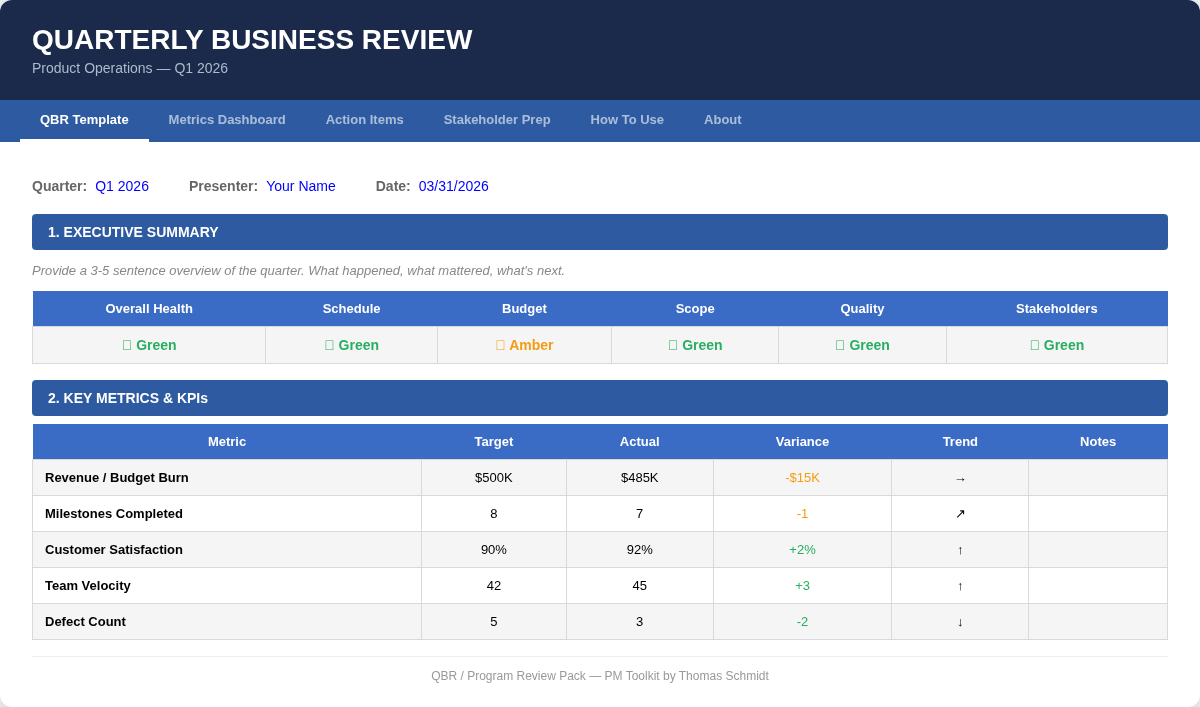
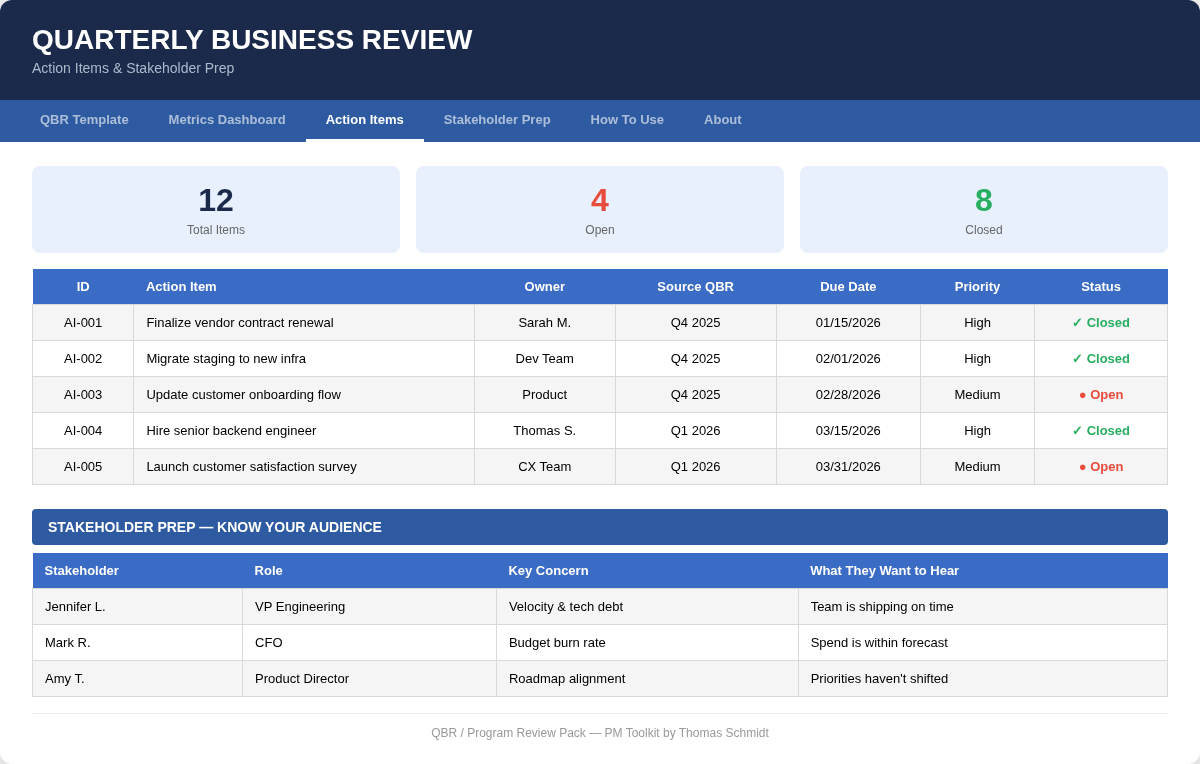
This template enforces the structure. Page 1 is decisions. Page 2 is forward commitments. Page 3 is the metrics they need to validate the asks. The history-and-victory-lap section is at the back — and it's a quarter the size you'd think it should be.