All tools › Planning & Kickoff › Prioritization Matrix
Planning

Prioritization Matrix

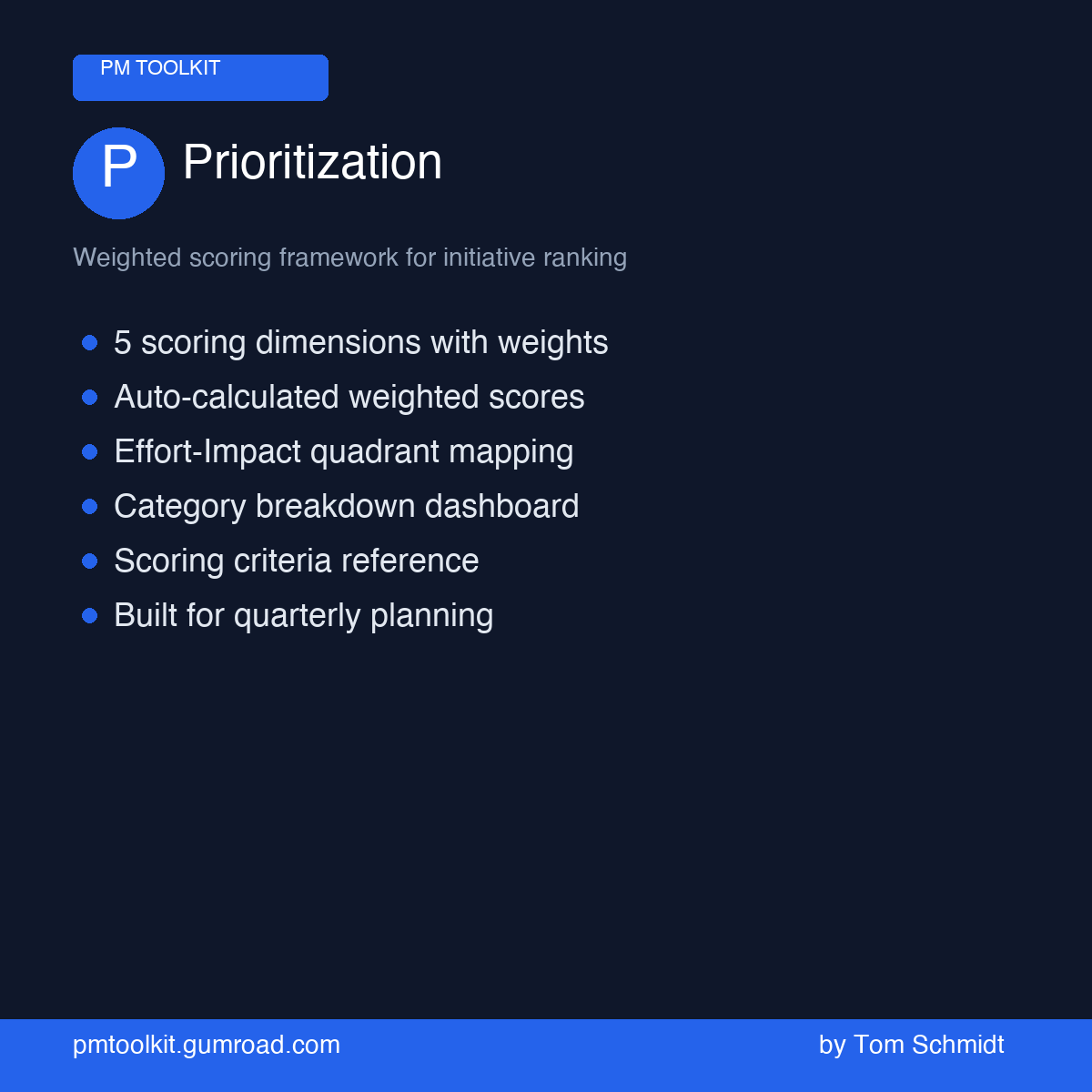
Force-rank competing initiatives by impact and effort. Auto-quadrant placement, transparent scoring rubric, decision log so you can explain the trade-offs later when someone asks why their pet project was deprioritized.

$29 one-time, instant download
✓ Excel + Google Sheets · ✓ Auto-quadrant placement · ✓ PDF cheat sheet
Buy Now — $29
Secure checkout via Gumroad · 30-day refund
Or get all 16 PM tools for $99. The full toolkit ships every template in the catalog — status reports, RAID logs, charters, OKRs, and more. See what's in the bundle ›

What's in the download

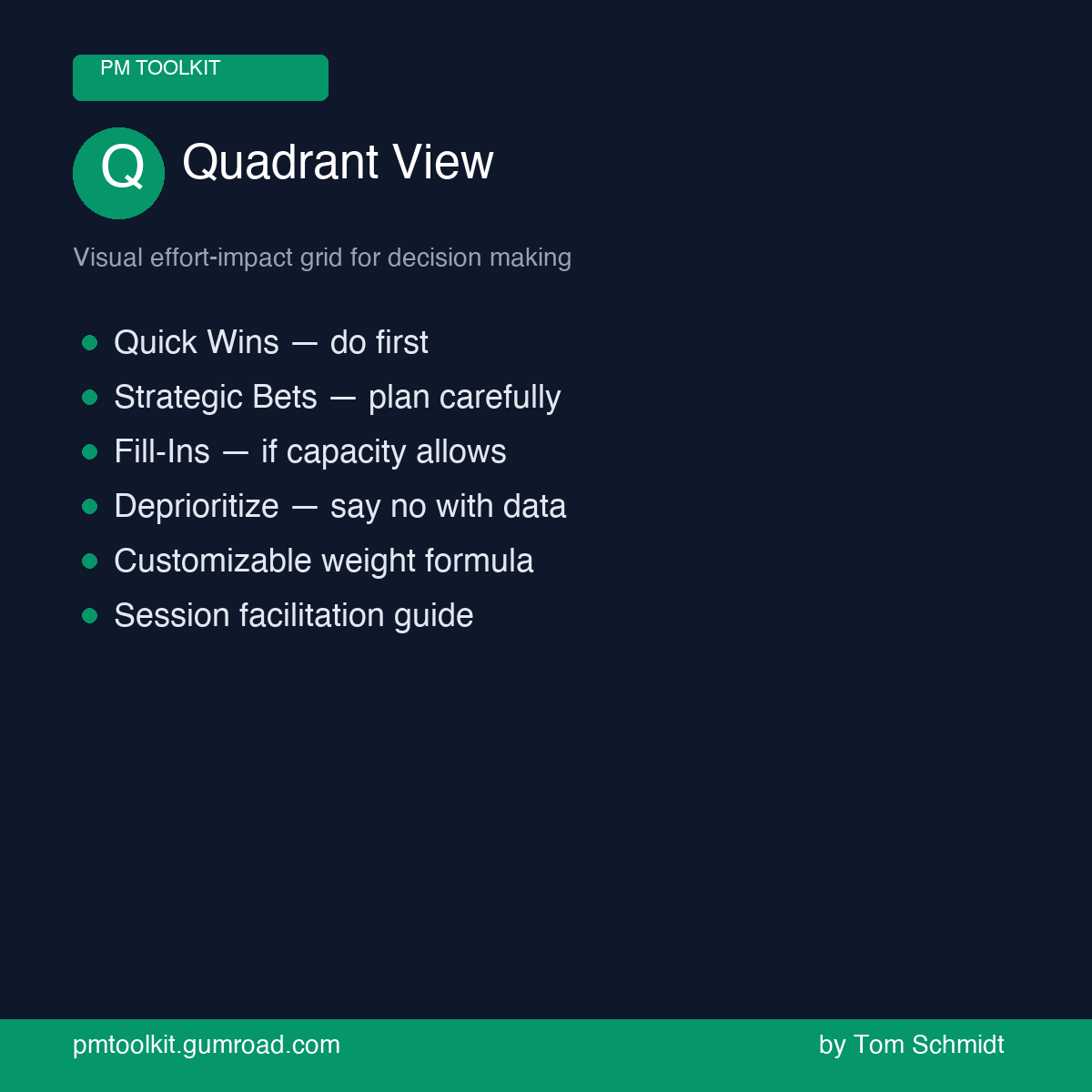
2x2 with auto-quadrant logic

Score impact and effort, the matrix places the item in the right quadrant automatically. Visual sort keeps you honest about what's actually high-impact-low-effort vs. wishful thinking.

Transparent scoring rubric

Pre-built rubric for what counts as high/medium/low impact and effort. Removes the "because I said so" problem when stakeholders push back.

Decision log + cheat sheet

Every prioritization decision logged with rationale. The cheat sheet covers how to facilitate the scoring session without it devolving into a debate club.

Use forever, no subscription

One purchase, yours to keep. Use it on every program, customize for your team. Works in Excel and Google Sheets.

Why "we'll prioritize later" never works

Every PM has been in the meeting where 14 initiatives are on the table, everyone agrees not all of them can ship this quarter, and the meeting ends with "let's prioritize offline." Then nothing happens, and at the next meeting you're still trying to do all 14, just slower.

Prioritization fails because it's done in someone's head with no shared rubric. Two people scoring "impact" can disagree by 10x and not know it. Without a structured score, the loudest voice wins, which is usually the most senior person, which is usually wrong on this question.

"Prioritization is the job. If you're not saying no to something, you're not actually prioritizing."

This template forces a shared score, surfaces the trade-offs visually, and logs the decision so when someone asks in three months "why didn't we do X?" you can show them.